
Where Plants Get Loud, Weird, and Wonderfully Informative
🌵 The Wild Wonders Blog
Welcome to the official blog of Wild Wonders Oasis—your go-to source for quirky plant facts, expert care tips, behind-the-scenes nursery peeks, and the occasional cactus with a superiority complex.
Here, we dig into everything from caudiciform oddities and carnivorous plant drama to succulent styling hacks and seasonal care advice. Whether you're a seasoned collector or a new plant parent just trying to keep things alive, we’ve got dirt you’ll want to read.
🪴 New posts sprouting regularly.
Grab your watering can—and your sense of humor—and let’s grow wild together.
Ghost Plant Care Guide: The Easiest Succulent You're Not Growing Yet
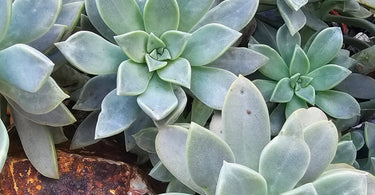
Meet the Ghost Plant
Graptopetalum paraguayense, commonly called the ghost plant, is one of the most beginner-friendly succulents in existence — and one of the most beautiful. Its rosettes of thick, fleshy leaves shift color dramatically depending on light and temperature: silvery-lavender in shade, blushing pink and peach in bright sun, and deepening to almost purple in cool conditions. It's also one of the easiest succulents to propagate, making it a favorite for collectors who want to multiply their collection quickly.
If you've struggled with succulents before, start here. Ghost plants are remarkably forgiving of imperfect conditions and bounce back from neglect that would kill most other succulents.
Light
Ghost plants are adaptable to a wide range of light conditions, but their appearance changes dramatically with light intensity:
- Full sun (6+ hours direct): Compact rosettes, vivid pink-peach-purple coloring, most ornamental appearance. Ideal outdoors.
- Bright indirect light: Larger, looser rosettes with silvery-lavender coloring. Still beautiful, slightly more open form.
- Low light: Plants survive but become etiolated (stretched) and lose their color intensity. Not recommended long-term.
Indoors, a south- or east-facing windowsill works well. Outdoors, ghost plants thrive in full sun in most climates. Acclimate gradually if moving from low to high light to prevent sunburn.
Watering
Ghost plants are exceptionally drought-tolerant — more so than most succulents. Their thick leaves store significant water reserves, allowing them to go weeks without watering without visible stress.
Use the soak and dry method: water thoroughly when the soil is completely dry, then wait until it's dry again before watering. In active growth (spring and fall), this might be every 10–14 days. In summer heat or winter rest, every 3–4 weeks or less.
Ghost plants are one of the few succulents that can tolerate occasional missed waterings without consequence — making them ideal for travelers or forgetful plant parents.
Soil & Pots
Use a fast-draining succulent mix with good drainage. Ghost plants are not fussy about soil quality as long as it drains well. A mix of 50% quality potting soil and 50% perlite works perfectly. Browse our Dirt That Gets It collection for suitable substrates.
Any pot with drainage holes works — terracotta is ideal as it helps the soil dry faster. Ghost plants look particularly striking in hanging baskets or elevated pots where their trailing stems can cascade over the edge as they mature.
Temperature & Cold Hardiness
Ghost plants are surprisingly cold-hardy for a succulent — they can handle temperatures down to about 20–25°F briefly, making them suitable for outdoor growing in USDA zones 7–11. In colder climates, grow in containers and bring indoors before hard frost.
They're also heat-tolerant, handling temperatures above 100°F with adequate water and some afternoon shade.

Seasonal Color Changes
One of the most delightful things about ghost plants is watching their color shift through the seasons:
- Spring: Fresh silvery-lavender new growth, often with a powdery coating (farina) that gives the "ghost" appearance
- Summer: Pinkish-peach tones in full sun; greener in shade
- Fall: Often the most colorful season — cool temperatures and bright light produce the deepest purples and pinks
- Winter: Colors intensify further in cool conditions; growth slows
Note on farina: Ghost plants have a powdery coating on their leaves that protects them from sun and moisture. Avoid touching the leaves — fingerprints remove the farina permanently and leave marks.
Propagation
Ghost plants are among the easiest succulents to propagate from leaves — almost every leaf you remove will produce a new plant.
- Gently twist a healthy, plump leaf from the stem with a clean break at the base (no torn tissue).
- Let it callous on a dry surface for 2–3 days.
- Lay on top of dry succulent mix — don't bury it.
- Mist lightly every 2–3 days once you see tiny pink roots emerging (usually 1–3 weeks).
- A tiny rosette will follow. Once the mother leaf has shriveled, pot up the baby plant.
Ghost plants also propagate readily from stem cuttings — cut, callous for 3–5 days, and plant in dry mix. See our full Succulent Propagation Guide for detailed instructions.
Common Problems
- Stretching/etiolation: Move to brighter light. The stretched growth won't compact, but you can behead and replant the rosette.
- Mushy leaves or base: Overwatering or root rot. Reduce watering, check drainage, repot if needed.
- Farina marks: Fingerprints on leaves are permanent. Handle by the stem or pot, not the leaves.
- Mealybugs: Check leaf axils. Treat with 70% isopropyl alcohol and neem oil spray.
Shop Ghost Plants & Succulents
- Ghost Plant (Graptopetalum paraguayense) Cuttings — 3 cuttings, ready to root
- Succulents Squad — full succulent collection
- Beginner Friendly Plants — other forgiving starter succulents
- Beginner Mode — our easiest plants overall
- Ultimate Succulent Plant Guide (Digital Download)
Featured Collection


