
Donde las plantas se vuelven ruidosas, extrañas y maravillosamente informativas
🌵 El blog de Maravillas Salvajes
Bienvenido al blog oficial de Wild Wonders Oasis, tu fuente de referencia para datos curiosos sobre plantas, consejos expertos de cuidado, vistazos entre bastidores del vivero y el cactus ocasional con complejo de superioridad.
Aquí, nos adentramos en todo, desde rarezas caudiciformes y dramas de plantas carnívoras hasta trucos de estilismo de suculentas y consejos de cuidado estacional. Tanto si eres un coleccionista experimentado como un nuevo padre de plantas que solo intenta mantener las cosas con vida, tenemos información que querrás leer.
🪴 Nuevas publicaciones brotando regularmente.
Agarra tu regadera —y tu sentido del humor— y ¡crezcamos salvajes juntos!
Venus Flytrap Seasonal Care: What to Do in Spring, Summer, Fall & Winter
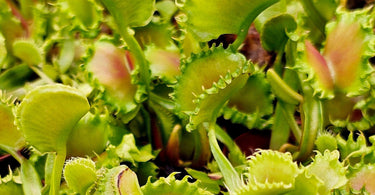
Why Seasonal Care Matters for Venus Flytraps
Venus flytraps (Dionaea muscipula) are native to the subtropical wetlands of North and South Carolina, where they experience distinct seasons — warm, humid summers and cool winters with a true dormancy period. Replicating this seasonal rhythm is the single most important thing you can do to keep your flytrap alive and thriving long-term. Plants that never go dormant gradually weaken and die within a few years.
Spring (March – May): Wake-Up Season
As temperatures rise and day length increases, your flytrap will emerge from dormancy with renewed energy. This is one of the most exciting times — you'll see new traps unfurling rapidly.
- Resume regular watering. Use the tray method: sit the pot in 1–1.5 inches of distilled, RO, or rainwater at all times. Never use tap water.
- Increase light gradually. Move to a spot with 4+ hours of direct sun, or ramp up grow light hours to 12–14 per day.
- Watch for flower stalks. Flytraps often send up a tall flower stalk in spring. Unless you want seeds, cut it off at the base — flowering takes enormous energy and can weaken the plant.
- Repot if needed. Spring is the best time to repot into fresh carnivorous plant media (peat/perlite or pure sphagnum). Check our Dirt That Gets It collection for the right substrates.
Summer (June – August): Peak Growing Season
Summer is when your flytrap is at its most active and hungry. Traps will be large, responsive, and ready to catch prey.
- Maintain the tray method consistently — the soil should never dry out completely.
- Maximum light. Outdoors in full sun is ideal if temperatures stay below 95°F. Indoors, a south-facing window or strong grow light works well.
- Let it hunt. If kept indoors, offer a small live or freeze-dried insect (mealworm, cricket, bloodworm) to one trap every 2–4 weeks. Only feed traps that are fully open and responsive — never force-feed a sluggish trap.
- Don't fertilize the soil. Ever. Flytraps get all the nutrients they need from prey.
- Remove dead traps. Black traps are normal after digestion or age — trim them at the base with clean scissors to keep the plant tidy and prevent mold.
Fall (September – November): Preparing for Dormancy
As days shorten and temperatures drop, your flytrap will naturally slow down. Traps become smaller and less responsive — this is normal and not a sign of illness.
- Reduce watering slightly. Keep the tray method going but let the water level drop a bit lower between refills.
- Stop feeding. The plant is winding down and won't digest efficiently.
- Move outdoors if possible. Exposure to natural temperature drops helps trigger proper dormancy. If keeping indoors, begin moving to a cooler spot (a garage, unheated porch, or cool windowsill).
Winter (December – February): Dormancy — Don't Skip This
Dormancy is non-negotiable for Venus flytraps. It's not optional, and it's not a sign your plant is dying — it's a sign it's healthy.
- Target temperature: 35–50°F for 3–4 months. A cold garage, unheated basement, or refrigerator (in a sealed bag with slightly moist sphagnum) all work.
- Reduce light. The plant doesn't need much light during dormancy — a few hours of weak light or even darkness is fine.
- Water sparingly. Keep the soil just barely moist — not wet, not bone dry. Check every 2–3 weeks.
- Expect die-back. Most or all of the above-ground growth may die back. This is completely normal. The rhizome (the white bulb at the base) is what survives and will resprout in spring.
- Don't feed, don't fertilize, don't repot during dormancy.
Year-Round Reminders
- Always use distilled, RO, or rainwater — minerals in tap water will kill your plant over time.
- Use carnivorous plant soil only — no regular potting mix, no fertilizer in the soil.
- Never use copper-containing products near your flytrap.
- Don't trigger traps for fun — each trap can only open and close a limited number of times before it dies.
Shop Venus Flytraps
Ready to add one of nature's most dramatic plants to your collection?
- Venus Flytrap 'Maroon Monster' — a deep red showstopper, nursery propagated
- Venus Flytrap 'Chinese Dumpling' — chubby, compact, and irresistible
Want to go deeper? Our Ultimate Carnivorous Plant Guide (Digital Download) covers Venus flytraps, sundews, pitcher plants, and more in full detail. Or browse our full Bug-Slaying Carnivores collection to find your next predatory plant.


