
Donde las plantas se vuelven ruidosas, extrañas y maravillosamente informativas
🌵 El blog de Maravillas Salvajes
Bienvenido al blog oficial de Wild Wonders Oasis, tu fuente de referencia para datos curiosos sobre plantas, consejos expertos de cuidado, vistazos entre bastidores del vivero y el cactus ocasional con complejo de superioridad.
Aquí, nos adentramos en todo, desde rarezas caudiciformes y dramas de plantas carnívoras hasta trucos de estilismo de suculentas y consejos de cuidado estacional. Tanto si eres un coleccionista experimentado como un nuevo padre de plantas que solo intenta mantener las cosas con vida, tenemos información que querrás leer.
🪴 Nuevas publicaciones brotando regularmente.
Agarra tu regadera —y tu sentido del humor— y ¡crezcamos salvajes juntos!
Air Plant Care Guide: How to Water, Feed & Display Tillandsia
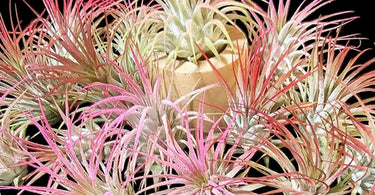
What Makes Air Plants Different
Tillandsia — commonly called air plants — are epiphytes, meaning they naturally grow anchored to trees, rocks, and other surfaces rather than in soil. They absorb water and nutrients through tiny scales on their leaves called trichomes, not through roots. This makes them uniquely low-maintenance, but it also means the rules are different from every other houseplant you own.
How to Water Air Plants
The most common mistake with air plants is underwatering. Despite their "no water needed" reputation, Tillandsia need regular moisture to thrive.
The soak method (recommended):
- Fill a bowl or sink with room-temperature water — distilled or rainwater is ideal, but tap water works if you let it sit overnight to off-gas chlorine.
- Submerge your air plants fully for 20–60 minutes, once a week (more often in dry climates or summer).
- After soaking, shake off excess water gently and place the plants upside down on a towel for 1–2 hours to drain. This is critical — water pooling in the base or center of the plant causes rot.
- Return to their display spot once fully dry.
Signs of underwatering: Leaves curl inward, tips turn brown and crispy, the plant feels light and papery.
Signs of overwatering/rot: Base turns dark brown or black, leaves pull away easily from the center, mushy texture.
Light Requirements
Most Tillandsia prefer bright indirect light — think near a window but not in harsh direct afternoon sun, which can scorch the leaves. A few hours of gentle morning sun is fine and actually beneficial.
- Indoors: Within 3–5 feet of a bright window (south or east-facing).
- Outdoors: Dappled shade or morning sun with afternoon shade.
- Grow lights: Full-spectrum LED, 6–8 inches away, 12 hours a day works well for low-light spaces.
How to Fertilize Air Plants
Air plants don't need much feeding, but a monthly fertilizer boost during the growing season (spring through fall) makes a noticeable difference in growth and blooming.
Use a bromeliad or Tillandsia-specific fertilizer diluted to 1/4 the recommended strength. Add it to your soaking water once a month. Never use a fertilizer with copper or boron — these are toxic to Tillandsia. Our Plant Food Feast collection has suitable options.
Temperature & Humidity
Tillandsia are comfortable in the same temperature range most people keep their homes: 50–90°F. They appreciate humidity but adapt well to average indoor conditions as long as you're watering consistently. In very dry climates (below 30% humidity), increase soaking frequency to twice a week.
Creative Display Ideas
One of the best things about air plants is that they can go anywhere — no pot, no soil required.
- Driftwood or cork bark: Attach with fishing line or non-copper wire. Never use glue — it blocks trichomes.
- Seashells: Rest (don't glue) a Tillandsia in a shell for an instant coastal display. Our Jellyfish Air Plant in a Seashell is a ready-made version of this look.
- Geometric terrariums: Open-sided glass terrariums allow airflow while creating a striking display.
- Hanging displays: Use copper-free wire or twine to suspend plants from shelves or curtain rods.
- Grouped arrangements: Cluster several varieties together for a lush, textural display.
Blooming & Pups
Every Tillandsia blooms once in its lifetime — a spectacular event that can last weeks. After blooming, the mother plant slowly dies back but produces offsets ("pups") around its base. Leave pups attached until they're at least one-third the size of the mother, then gently twist them free to grow independently.
Shop Our Air Plants
- Tillandsia ionantha 'Rubra' — blushes deep red before blooming
- Tillandsia caput-medusae — wild, sculptural Medusa-like form
- Tillandsia ionantha Red & Pink — a tiny drama queen with big color
- Jellyfish Air Plant in a Seashell — a gift-ready display piece
New to plants altogether? Our Beginner Friendly Plants and Cozy Desk Plants collections are great starting points.


