
Where Plants Get Loud, Weird, and Wonderfully Informative
🌵 The Wild Wonders Blog
Welcome to the official blog of Wild Wonders Oasis—your go-to source for quirky plant facts, expert care tips, behind-the-scenes nursery peeks, and the occasional cactus with a superiority complex.
Here, we dig into everything from caudiciform oddities and carnivorous plant drama to succulent styling hacks and seasonal care advice. Whether you're a seasoned collector or a new plant parent just trying to keep things alive, we’ve got dirt you’ll want to read.
🪴 New posts sprouting regularly.
Grab your watering can—and your sense of humor—and let’s grow wild together.
Carnivorous Plants for Pest Control: Get Rid of Fungus Gnats Naturally
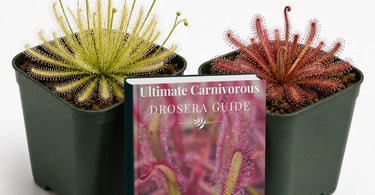
The Most Satisfying Pest Control You'll Ever Use
If you've ever battled fungus gnats — those tiny, infuriating flies that hover around your houseplants and seem impossible to eliminate — carnivorous plants might be the solution you didn't know existed. Several species are remarkably effective at catching and killing the insects that plague indoor plant collections, all without chemicals, traps, or repeated treatments.
Here's which carnivorous plants work best for pest control, how effective they actually are, and how to set them up for maximum impact.
The Pest Problem: Fungus Gnats & Fruit Flies
Fungus gnats are the #1 houseplant pest. Their larvae live in moist soil and feed on organic matter and roots; the adults fly around annoyingly and lay more eggs. They're attracted to moist soil and organic material, which means any houseplant collection is a potential breeding ground.
Fruit flies are attracted to ripening fruit, fermentation, and organic waste. They're a different species from fungus gnats but equally annoying and similarly catchable by carnivorous plants.
Both are small enough to be caught by sticky-leaved carnivores and passive trappers — making them ideal prey for the right plants.
Best Carnivorous Plants for Pest Control
1. Butterworts (Pinguicula) — The Most Effective
Butterworts are the undisputed champions of fungus gnat control. Their flat, fleshy leaves are coated in sticky mucilage that traps small flying insects on contact — no active mechanism required. A single healthy Pinguicula can catch dozens of gnats per week, and they work 24/7 without any intervention from you.
They're also among the easiest carnivorous plants to keep alive indoors — tolerating lower light and average humidity better than most carnivores.
Best placement: On a windowsill or shelf near your other houseplants, where gnats are most active. The closer to the problem, the better.
→ Pinguicula Gigantea — Giant Butterwort — large leaves = more catching surface
2. Sundews (Drosera) — Highly Effective & Beautiful
Sundews are passive trappers with glistening, sticky tentacles that catch fungus gnats, fruit flies, and other small flying insects. Cape Sundews (Drosera capensis) are particularly effective — their long leaves provide a large catching surface, and they grow quickly enough to replace leaves faster than gnats can avoid them.
A cluster of 3–5 Cape Sundews near a gnat-prone area can make a noticeable dent in a population within a week or two.
Best placement: Bright windowsill near affected plants. They need more light than butterworts, so a south or east-facing window is ideal.
- Drosera capensis 'Cape Sundew' — the workhorse gnat-catcher
- Drosera capensis 'Mini Red' — compact form for smaller spaces
- Sundew Collector Bundle — maximum coverage with multiple varieties
3. Venus Flytraps — Good for Larger Insects, Less Effective for Gnats
Venus flytraps are iconic but not the best choice for fungus gnat control specifically. Their traps are sized for larger prey — small gnats can sometimes walk across the trigger hairs without setting off the trap. They're better at catching larger flies, spiders, and crawling insects.
That said, they're a great addition to a carnivorous plant pest-control setup alongside sundews and butterworts.
4. Pitcher Plants — Best Outdoors or in High-Pest Areas
Pitcher plants are highly effective when kept outdoors or in areas with high insect activity — a single Sarracenia in a sunny outdoor spot can catch hundreds of insects per season. Indoors, they're less effective for gnat control since gnats need to fly into the pitcher opening, which requires the right positioning.
How Many Plants Do You Need?
For a mild gnat problem: 2–3 butterworts or sundews placed near affected plants will make a noticeable difference within 1–2 weeks.
For a serious infestation: 5–8 plants spread around the affected area, combined with addressing the root cause (overwatered soil, decaying organic matter). Carnivorous plants catch adults but don't eliminate larvae in the soil — for severe infestations, combine with a soil drench of Bacillus thuringiensis var. israelensis (Bti), a natural biological control that kills gnat larvae.
Care Requirements for Pest-Control Plants
The catch: carnivorous plants have specific care needs that differ from regular houseplants. The most important rules:
- Distilled or rainwater only — tap water will kill them over time
- No fertilizer in the soil — they get nutrients from the insects they catch
- Carnivorous plant soil only — regular potting mix is too rich. See our Dirt That Gets It collection
- Good light — a bright windowsill or grow light keeps them healthy and actively trapping
For full care details, see our Carnivorous Plants for Beginners Guide.
Shop Pest-Control Carnivorous Plants
- How Carnivorous Plants Help With Fungus Gnats — our curated pest-control collection
- Pinguicula Gigantea — best for gnats
- Cape Sundew — highly effective passive trapper
- Sundew Collector Bundle — maximum gnat-catching coverage
- Bug-Slaying Carnivores — full carnivorous plant collection
Featured Collection


