
Where Plants Get Loud, Weird, and Wonderfully Informative
🌵 The Wild Wonders Blog
Welcome to the official blog of Wild Wonders Oasis—your go-to source for quirky plant facts, expert care tips, behind-the-scenes nursery peeks, and the occasional cactus with a superiority complex.
Here, we dig into everything from caudiciform oddities and carnivorous plant drama to succulent styling hacks and seasonal care advice. Whether you're a seasoned collector or a new plant parent just trying to keep things alive, we’ve got dirt you’ll want to read.
🪴 New posts sprouting regularly.
Grab your watering can—and your sense of humor—and let’s grow wild together.
How to Feed Carnivorous Plants: What, When & How Much
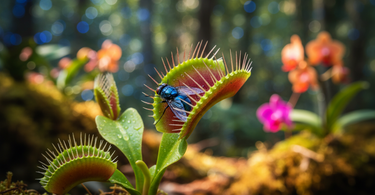
Do Carnivorous Plants Actually Need to Be Fed?
Technically, no — carnivorous plants can survive without supplemental feeding as long as they have adequate light, water, and the occasional wild insect. But feeding accelerates growth, improves vigor, and produces larger, more dramatic traps. Think of it as optional but highly beneficial, like giving your plants a performance boost.
The key rule: never fertilize the soil. Carnivorous plants evolved in nutrient-poor environments and their roots are not equipped to handle fertilizer — it will burn them. All nutrition should come through the traps.
What to Feed: By Plant Type
Venus Flytraps
Venus flytraps are designed for larger prey — insects that fit comfortably inside the trap (no more than 1/3 the trap's size).
- Best options: Live or freeze-dried mealworms, crickets, bloodworms, or small flies
- Avoid: Meat, cheese, hamburger, or anything with seasoning — these rot before digestion and can kill the trap
- Frequency: One trap, once every 2–4 weeks during the growing season. The plant only has so many traps — don't overfeed.
- Technique: If using freeze-dried prey, rehydrate it first with a drop of water, then place it in an open trap and gently squeeze the sides to trigger closure. The trap needs to detect movement to begin digestion — wiggle the prey slightly with tweezers if it doesn't close.
Sundews (Drosera)
Sundews are passive trappers — their sticky tentacles do all the work. They're most effective against small flying insects.
- Best options: Fruit flies (Drosophila), fungus gnats, small gnats, freeze-dried bloodworms or mealworms
- Avoid: Large insects that can break free and damage tentacles
- Frequency: Every 2–3 weeks indoors. Outdoors, they'll catch their own prey continuously.
- Technique: Place a small piece of rehydrated freeze-dried prey on a leaf. The tentacles will curl around it within hours.
Our Cape Sundew and Octopus Sundew are particularly voracious feeders that respond visibly and quickly to prey.
Pitcher Plants (Nepenthes & Sarracenia)
Pitchers are passive traps — insects fall in and drown in digestive fluid. They're the most self-sufficient carnivores when kept outdoors.
- Best options: Small live insects, freeze-dried crickets or mealworms, or a few drops of diluted MaxSea fertilizer (1/4 tsp per gallon) added directly into the pitcher
- Avoid: Large prey that can decompose faster than the plant can digest
- Frequency: Feed one pitcher every 3–4 weeks indoors. Never fill more than 1/3 of the pitcher with prey.
- Note: Keep pitchers about 1/4 full of distilled water — this maintains the digestive fluid concentration.
Butterworts (Pinguicula)
Butterworts are the most effortless feeders — their sticky leaves passively trap fungus gnats and small flies without any intervention.
- Best options: Fungus gnats (they'll catch these on their own), fish flakes, or a tiny pinch of dried bloodworms placed on a leaf
- Frequency: Once a month if supplementing manually
- Avoid: Large insects that can damage the delicate leaves
Our Pinguicula Gigantea is a particularly large-leafed species that can handle bigger prey items than most butterworts.
Feeding Mistakes to Avoid
- Feeding during dormancy: Don't feed Venus flytraps or Sarracenia in winter — they can't digest efficiently and the prey will rot.
- Triggering empty traps repeatedly: Each Venus flytrap trap can only open and close a limited number of times. Triggering it for fun wastes its energy.
- Overfeeding: More food doesn't mean faster growth. One trap, once every few weeks is plenty.
- Using tap water to rehydrate prey: Always use distilled water — even the small amount used to rehydrate freeze-dried prey can introduce minerals.
- Feeding a stressed or newly arrived plant: Give new plants 2–4 weeks to acclimate before feeding.
The Best Prey Sources
- Freeze-dried bloodworms (sold for fish) — widely available, easy to store, work for all carnivore types
- Freeze-dried mealworms — great for flytraps and pitcher plants
- Live fruit fly cultures — ideal for sundews and butterworts
- Your home's own fungus gnats — if you have a gnat problem, your carnivores will solve it
Shop Carnivorous Plants
Featured Collection


