

So You Want a Plant That Eats Things
Welcome to one of the most rewarding niches in the plant world. Carnivorous plants are endlessly fascinating, genuinely useful (natural pest control!), and surprisingly varied. But they're not all equally forgiving — and picking the wrong one for your conditions is the fastest way to get discouraged.
Here's an honest breakdown of the four most common carnivorous plant types, ranked by difficulty and matched to different living situations.
Venus Flytrap — The Icon
Difficulty: Moderate
The Venus flytrap is the plant everyone recognizes, but it's not actually the easiest to keep alive long-term. Most flytraps sold in grocery stores and garden centers die within months because buyers don't know about their two non-negotiable requirements: pure water and winter dormancy.
Best for: Someone with a bright, sunny windowsill (4+ hours direct sun), access to distilled water, and a cool spot for winter dormancy (a garage or unheated room at 35–50°F for 3–4 months).
Not ideal for: Apartments with low light, warm climates with no cool winter period, or anyone who travels frequently in winter.
Reward: Watching those traps snap shut is never not satisfying. Our Venus Flytrap 'Maroon Monster' and 'Chinese Dumpling' are stunning cultivars that go well beyond the standard green variety.
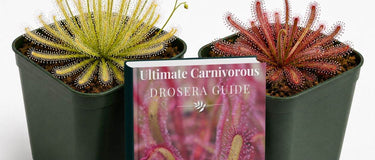
Sundew (Drosera) — The Best Beginner Carnivore
Difficulty: Easy
If you're new to carnivorous plants, start here. Sundews — especially Drosera capensis (Cape Sundew) — are the most forgiving carnivorous plants available. They tolerate a wider range of conditions than flytraps, don't require dormancy, and are incredibly effective at catching fungus gnats and fruit flies.
Best for: Beginners, apartment dwellers, anyone with a bright windowsill or grow light. Cape Sundews are nearly indestructible once established.
Not ideal for: Very low-light spaces (they still need decent light to produce dew).
Reward: Glistening, jewel-like tentacles that actively curl around prey. Fast-growing and prolific — they'll self-seed in your collection if you let them.
- Drosera capensis 'Cape Sundew' — the classic starter
- Drosera capensis 'Mini Red' — compact ruby-red form
- Drosera capensis 'Octopus' — long dramatic tentacles for collectors
- Sundew Collector Bundle — the best way to start a Drosera collection
Butterwort (Pinguicula) — The Secret Weapon
Difficulty: Easy to Moderate
Butterworts are the carnivorous plant most houseplant collectors don't know about — and they're missing out. Pinguicula have flat, fleshy leaves coated in sticky mucilage that passively traps fungus gnats and small flies. They require no active feeding, tolerate lower humidity than most carnivores, and many species look like beautiful succulents in winter.
Best for: Houseplant collectors dealing with fungus gnats, anyone who wants a low-drama carnivore, terrarium growers.
Not ideal for: People expecting dramatic trap action — Pinguicula are subtle hunters.
Reward: Effortless pest control and surprisingly beautiful flowers. Our Pinguicula Gigantea is one of the largest species available — a real statement plant.
Pitcher Plant — The Showstopper
Difficulty: Moderate to Advanced
Pitcher plants (Nepenthes and Sarracenia) are the most dramatic carnivores — their hanging or upright pitchers filled with digestive fluid are genuinely impressive. But they have more specific requirements than sundews or butterworts, particularly around humidity (Nepenthes) and dormancy (Sarracenia).
Best for: Growers with outdoor space or a greenhouse, or indoor growers willing to manage humidity. Nepenthes are better suited to indoor growing than Sarracenia.
Not ideal for: True beginners or low-humidity indoor environments without supplemental humidity.
Reward: Pitchers that can grow to impressive sizes and catch large insects. A mature Sarracenia in full sun is one of the most striking plants you can grow.
Quick Comparison
| Plant | Difficulty | Light Needed | Dormancy? | Best Feature |
|---|---|---|---|---|
| Sundew | Easy | Bright indirect+ | No (most species) | Gnat control, fast growth |
| Butterwort | Easy | Bright indirect | Some species | Passive pest control |
| Venus Flytrap | Moderate | 4+ hrs direct sun | Yes (required) | Interactive traps |
| Pitcher Plant | Moderate+ | Bright to full sun | Sarracenia yes | Dramatic size & form |
Our Recommendation
Start with a Cape Sundew or a Sundew Collector Bundle. Master the basics — pure water, good light, no fertilizer — and then add a Venus flytrap or pitcher plant once you're confident. Add a Pinguicula to your collection at any point for effortless gnat control.
Shop Beginner Carnivorous Plants
- Beginner Mode — our curated beginner-friendly collection
- Bug-Slaying Carnivores — full carnivorous plant range
- How Carnivorous Plants Help With Fungus Gnats — targeted pest control picks
- Ultimate Carnivorous Plant Guide (Digital Download) — everything you need to know


