

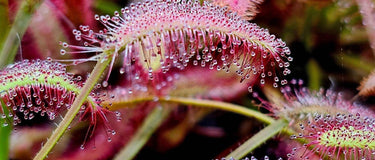
Your Sundew Looks Dry — Don't Panic Yet
A sundew without dew is like a spider without a web: technically alive, but not doing its best work. The good news? Loss of stickiness is almost always reversible once you identify the cause. Here's what's likely going wrong and how to get those glistening tentacles back.
The #1 Culprit: Wrong Water
Sundews are extremely sensitive to minerals. Tap water — even filtered tap water — contains dissolved salts and minerals that accumulate in the soil and essentially poison the plant over time. The result: tentacles that look dull, dry, or curl inward without producing mucilage.
Fix: Switch immediately to distilled water, reverse osmosis (RO) water, or collected rainwater. Never use tap, spring, or bottled mineral water. If you've been using tap water for a while, flush the pot thoroughly with distilled water several times to leach out built-up minerals.
Not Enough Light
Sundews need 4–6+ hours of direct or very bright indirect light daily to produce mucilage. Low light is the second most common reason for a dry, sad sundew. A windowsill that gets morning sun for an hour isn't enough.
Fix: Move your plant to a south- or east-facing window with maximum light exposure. If natural light is limited, a grow light positioned 4–6 inches above the plant for 12–14 hours a day works beautifully. You'll typically see new dew within 1–2 weeks of improving light conditions.
Low Humidity
Most sundews — especially Drosera capensis varieties — thrive in 50–70%+ humidity. In dry climates or air-conditioned homes, humidity can drop well below that, causing tentacles to dry out.
Fix: Place your sundew on a humidity tray filled with water (but don't let the pot sit directly in standing water — use pebbles to elevate it). Grouping plants together also raises local humidity naturally.
The Plant Is Dormant or Stressed
Some sundew species go through a semi-dormant period in winter when growth slows and dew production drops. Stress from repotting, shipping, or temperature swings can also temporarily suppress mucilage production.
Fix: Give the plant 2–4 weeks to acclimate after any major change. Maintain consistent conditions — stable temperature (60–85°F for most species), good light, and pure water — and it will bounce back.
Fertilizer or Soil Issues
Carnivorous plants evolved in nutrient-poor environments. Regular potting soil or any fertilizer will damage roots and suppress the plant's carnivorous instincts. If someone told you to feed your sundew plant food — that's the problem.
Fix: Use only carnivorous plant-specific media (a mix of peat moss and perlite or pure sphagnum moss). Check out our Dirt That Gets It collection for the right substrates. Never fertilize the soil.
Can I Feed My Sundew to Help It Recover?
Yes — but only once it's already producing some dew. Offering a small live or freeze-dried insect to an active leaf can give the plant a nitrogen boost that accelerates recovery. Don't force-feed a completely dry plant; it won't be able to digest anything.
Shop Our Sundews
If you're ready to add more sticky hunters to your collection, explore our range of nursery-propagated (never wild-collected) sundews:
- Drosera capensis 'Cape Sundew' — the classic beginner-friendly sundew
- Drosera capensis 'Mini Red' — a ruby-red compact variety
- Drosera capensis 'Octopus' — long, dramatic tentacles
- Drosera binata 'Marston Dragon' — forked leaves for serious collectors
- Sundew Collector Bundle — the ultimate Drosera starter pack
And if you want to go deep on carnivorous plant care, our Ultimate Carnivorous Plant Guide (Digital Download) covers everything from water chemistry to dormancy management.


)