
Where Plants Get Loud, Weird, and Wonderfully Informative
🌵 The Wild Wonders Blog
Welcome to the official blog of Wild Wonders Oasis—your go-to source for quirky plant facts, expert care tips, behind-the-scenes nursery peeks, and the occasional cactus with a superiority complex.
Here, we dig into everything from caudiciform oddities and carnivorous plant drama to succulent styling hacks and seasonal care advice. Whether you're a seasoned collector or a new plant parent just trying to keep things alive, we’ve got dirt you’ll want to read.
🪴 New posts sprouting regularly.
Grab your watering can—and your sense of humor—and let’s grow wild together.
How to Propagate Carnivorous Plants: Division, Leaf Pullings & More
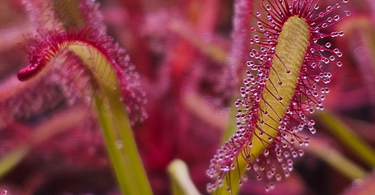
Why Propagate Carnivorous Plants?
Carnivorous plants can be expensive to buy, but once you have a healthy specimen, many species are surprisingly easy to multiply. Propagation also lets you share plants with other enthusiasts, create backups of rare cultivars, and deepen your understanding of how these remarkable plants grow. Each species has its own preferred method — here's what works best for each.
Venus Flytrap: Division & Leaf Pullings
Division (Easiest & Most Reliable)
Mature Venus flytraps produce multiple crowns (growing points) over time. Division separates these into individual plants.
- Unpot the plant in early spring, just as it emerges from dormancy.
- Gently tease apart the rhizomes (white bulb-like bases) — each crown with attached roots can become a new plant.
- Pot each division in fresh carnivorous plant mix (peat/perlite 50:50 or pure sphagnum).
- Resume the tray method with distilled water and place in bright light.
- Expect some stress for 2–4 weeks before new growth appears.
Leaf Pullings (Slower but Rewarding)
- Select a healthy, mature leaf and pull it away from the rhizome with a firm, steady tug — you need the white base of the leaf intact.
- Place the leaf (white end down) on the surface of moist sphagnum moss or peat/perlite mix.
- Keep in a humid environment (a clear plastic bag or propagation tray works well) with bright indirect light.
- Tiny plantlets emerge from the white base in 2–3 months. Be patient — this method is slow but produces true-to-type plants.
Sundews (Drosera): Leaf Cuttings & Division
Leaf Cuttings (Best for Cape Sundews)
Drosera capensis and its relatives are among the easiest carnivorous plants to propagate.
- Cut a healthy leaf near the base with sterilized scissors.
- Lay it flat on the surface of moist sphagnum or peat/perlite mix. Don't bury it.
- Cover with a clear lid or plastic bag to maintain humidity.
- Keep in bright indirect light. Tiny plantlets appear along the leaf in 4–8 weeks.
- Once plantlets have 3–4 leaves, carefully separate and pot them individually.
Root Cuttings
Sundew roots can also produce plantlets. When repotting, cut a root into 1-inch sections and lay them on moist media. Cover and keep humid. Slower than leaf cuttings but useful when leaves are scarce.
Self-Seeding
Cape Sundews are prolific self-seeders. If you allow a flower stalk to go to seed, tiny seedlings will appear around the mother plant within weeks. Simply pot them up when large enough to handle.
Pitcher Plants: Division & Stem Cuttings
Sarracenia: Division
Sarracenia form clumping rhizomes that can be divided in early spring.
- Unpot the plant and locate natural division points in the rhizome.
- Cut with a sterilized knife, ensuring each section has at least one growing point and some roots.
- Dust cuts with cinnamon (natural antifungal) and pot in fresh carnivorous plant mix.
- Resume tray watering and keep in full sun.
Nepenthes: Stem Cuttings
- Cut a stem section with 2–3 nodes (leaf attachment points), ideally with a node at the base.
- Remove lower leaves, leaving 1–2 leaves at the top.
- Place in moist long-fiber sphagnum moss in a humid propagation chamber (70%+ humidity is essential).
- Roots form in 6–12 weeks. Nepenthes cuttings are slower than most plants — patience is key.
Butterworts (Pinguicula): Leaf Pullings
- Gently pull a healthy leaf from the base of the plant, keeping the white base intact.
- Place on moist perlite or peat/perlite mix, white end slightly buried.
- Cover with a clear lid to maintain humidity and place in bright indirect light.
- Tiny plantlets appear at the leaf base in 4–8 weeks.
- Our Pinguicula Gigantea produces large leaves that are particularly easy to propagate this way.
Universal Rules for Carnivorous Plant Propagation
- Always use distilled or rainwater — never tap water, even for misting propagation setups.
- Use nutrient-poor media — pure sphagnum or peat/perlite only. No fertilizer, ever.
- High humidity is your friend — most carnivore cuttings root best in a covered propagation environment.
- Sterilize your tools — wipe scissors and knives with 70% isopropyl alcohol between cuts to prevent fungal spread.
- Don't rush — carnivorous plants propagate more slowly than most houseplants. Give them time.
Shop Carnivorous Plants & Supplies
- Sundew Collector Bundle — a great starting collection to propagate from
- Bug-Slaying Carnivores — full carnivorous plant collection
- Dirt That Gets It — carnivorous plant substrates
- Ultimate Carnivorous Plant Guide (Digital Download)
Featured Collection


