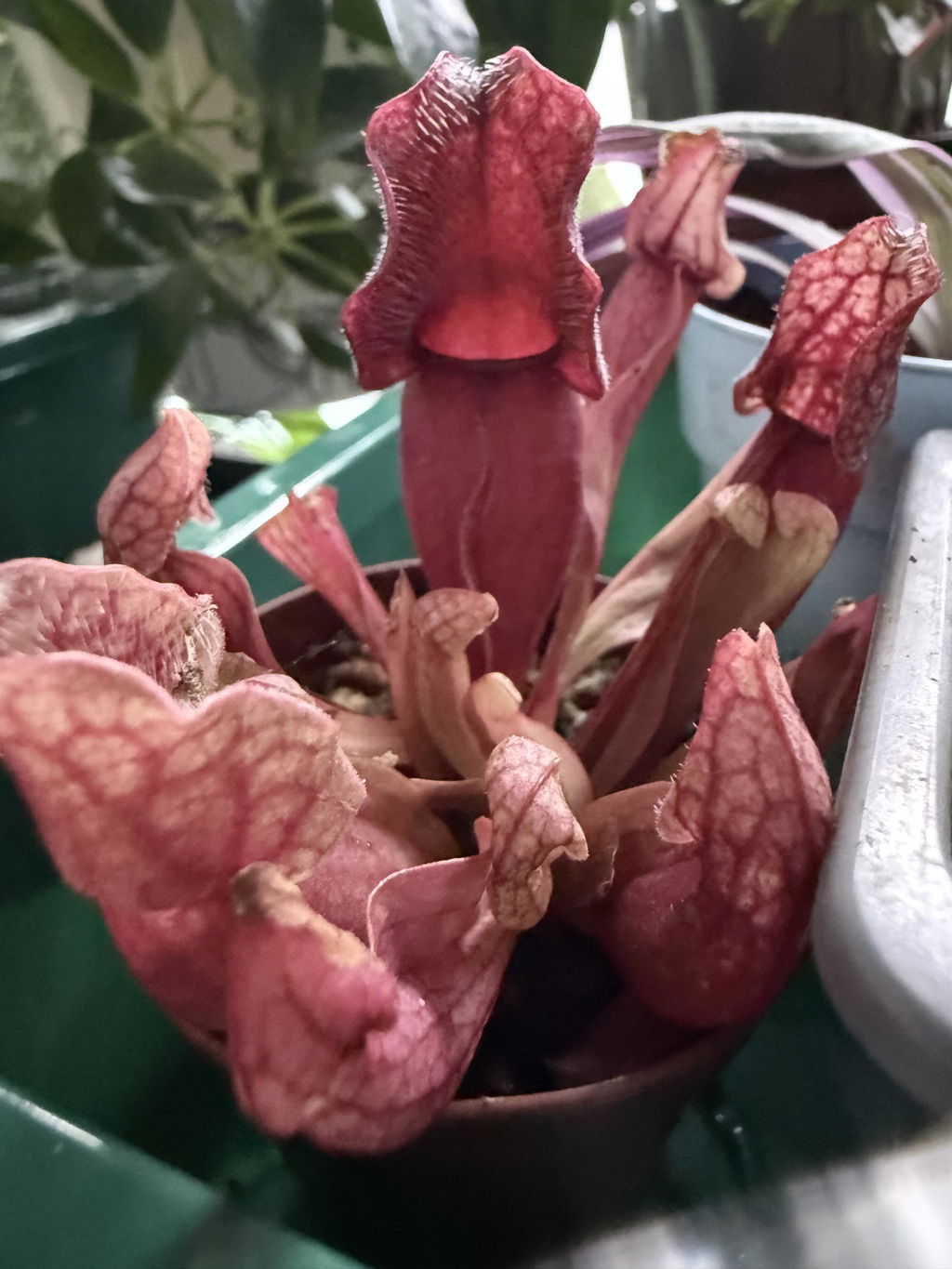
Pretty Little Butterworts Predators
Sticky, Sweet, and Secretly Savage
Butterworts may look like innocent little rosettes of leafy charm—but don’t be fooled. These dainty assassins lure in gnats with their buttery-looking leaves, then trap and digest them like it’s no big deal. It’s like if a pancake wore lipstick and had a dark side.
Their glossy leaves sparkle like they just got a fresh facial, but under that dewy glow? Full-on bug trap mode. Perfect for windowsill warriors, terrarium keepers, or anyone who’s overrun by fungus gnats and wants revenge—with style.
✨ Bonus: They bloom like angels but feed like villains. What’s not to love?
Bye-bye bugs, hello plant power. Butterworts do the dirty work and look good doing it.
Stock is limited because collectors know what’s up.
👉 Add a butterwort to your plant posse today—your gnats will hate you for it (but we won’t).
For plant nerdsThe story behind these plants ReadClose
Quick facts
- 🧈 Named for their buttery, greasy-looking leaves (Latin pinguis, "fat")
- 🌎 About 126 species, with the most in Mexico, Central and South America
- 🪰 Flypaper traps: sticky leaf glands catch gnats, then digest them
- 🥛 In Sweden and Norway the leaves were once used to curdle milk
- 🌗 Many Mexican species swap sticky summer leaves for succulent winter rosettes
Sources: Wikipedia: Pinguicula
-

快速查看 选择选项 🎁 Wild Wonders Oasis Gift Card 起价 $10.00 / -
Notify Me When In Stock ![Pinguicula ‘Pirouette’ pastel butterwort with green rosette and delicate pink flowers on slender stems]()

已售罄 Pinguicula 'Pirouette' – Pink Flowering Butterwort, Live Carnivorous Plant for Fungus Gnats (Bare Root) $16.99 /Non-toxic to pets*Beginner


* Pet info reflects our review of the best available published third-party sources, such as the ASPCA's plant lists. We don't test plants ourselves, and toxicity data can change, so pet owners should review the latest information and supervise pets around all plants. Pet safety note

Never kept a plant alive? Cool. We wrote the cheat sheet.
Nervous you’ll kill it? Every plant ships with its own care card, a QR code to its free online guide, and a team of plant nerds who actually answer messages. You’ve got this.
Want it in your pocket forever? Grab a downloadable deep-dive guide, or start with a beginner-friendly plant.
Coming Soon!
Weird, wonderful, and worth making windowsill space for. Peek at what’s coming and sign up for an alert when your favorites are ready to shop.

Coming Soon: Worth the Wait 🌿
Our next crop of “okay, just one more” is getting ready for its grand entrance. Discover upcoming plants with unusual shapes, gorgeous colors, and absolutely no respect for your shelf-space limits.
Notify Me When Available


Plant Care Guides & Digital Goodies