
Where Plants Get Loud, Weird, and Wonderfully Informative
🌵 The Wild Wonders Blog
Welcome to the official blog of Wild Wonders Oasis—your go-to source for quirky plant facts, expert care tips, behind-the-scenes nursery peeks, and the occasional cactus with a superiority complex.
Here, we dig into everything from caudiciform oddities and carnivorous plant drama to succulent styling hacks and seasonal care advice. Whether you're a seasoned collector or a new plant parent just trying to keep things alive, we’ve got dirt you’ll want to read.
🪴 New posts sprouting regularly.
Grab your watering can—and your sense of humor—and let’s grow wild together.
Carnivorous Plant Water Guide (distilled/RO/rain; what never to use)
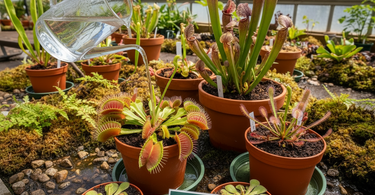
(What to Use, What to NEVER Use, and Why Your Plants Are Judging You)
Let’s talk about water.
Not hydration.
Not vibes.
Not “but it’s filtered!”
Actual water chemistry.
Because if carnivorous plants could talk, they’d say:
“I can eat bugs, but I will perish over tap water.”
This guide will show you exactly what water to use, what will quietly murder your plant, and how to set up your carnivorous collection for long-term, bug-eating success.
Spoiler: Brita does not count. 💀💧
Why Water Matters More for Carnivorous Plants
Carnivorous plants evolved in nutrient-poor bogs where:
-
Rain constantly flushes minerals
-
Soil is basically… nothing
-
Roots are extremely sensitive
So when you give them mineral-rich water, they don’t “adjust.”
They shut down.
Symptoms of bad water:
❌ No dew on sundews
❌ Brown leaf tips
❌ Sudden decline
❌ “It was fine yesterday” syndrome
Water quality isn’t a preference.
It’s a survival requirement.
✅ The ONLY Safe Water Options
💧 Distilled Water (The Gold Standard)
✔ Zero minerals
✔ Readily available
✔ Foolproof
If you’re unsure — use distilled.
This is the safest option for:
-
Sundews (Drosera)
-
Butterworts (Pinguicula)
-
Pitcher plants (Sarracenia, Nepenthes)
💧 Reverse Osmosis (RO) Water
✔ Ultra-purified
✔ Excellent for long-term collections
✔ Ideal for serious plant parents
Just make sure it’s:
-
True RO
-
Not “remineralized”
(Read the label. Then read it again.)
💧 Rainwater (Nature’s Favorite)
✔ Free
✔ Perfect chemistry
✔ Plants love it
Rules:
-
Collect from clean surfaces
-
Avoid runoff from roofs with chemicals
-
Don’t store it forever
If your rain barrel smells suspicious — we need to talk.
❌ Water You Should NEVER Use (Seriously, Never)
🚫 Tap Water
Even if:
-
“It tastes fine”
-
“My plants are used to it”
-
“It’s treated”
Tap water contains minerals that build up in the soil and slowly poison carnivorous plants.
It’s not dramatic — it’s chemistry.
🚫 Filtered Water (Brita, Fridge Filters, Pitchers)
Filtered ≠ mineral-free.
These filters:
-
Improve taste
-
Remove chlorine
-
Do NOT remove dissolved minerals
Your carnivorous plant does not care how refreshing it tastes.
🚫 Bottled Drinking Water
Most bottled water contains:
-
Added minerals
-
Calcium
-
Magnesium
That’s great for humans.
That’s a death sentence for carnivorous plants.
🚫 Softened Water
Softened water replaces calcium with salt.
Salt + carnivorous plant = immediate regret.
How to Water Carnivorous Plants (The Right Way)
🪴 Bottom-Watering Is Your Best Friend
-
Place pot in a shallow tray
-
Fill tray with safe water
-
Let plant absorb what it needs
This keeps:
✔ Roots happy
✔ Soil evenly moist
✔ Minerals from concentrating at the surface
🌿 Keep Soil Moist — Not Soggy
Most carnivorous plants:
-
Love consistently moist soil
-
Hate drying out completely
Exception:
-
Some butterworts during dormancy (they’ll tell you)
Signs Your Water Is Wrong (Even If You Swear It’s Fine)
Watch for:
-
Sundews losing dew
-
Pitchers browning early
-
Growth stalling
-
Algae buildup on soil
If you see this:
✔ Flush soil with distilled water
✔ Switch water source immediately
✔ Stop fertilizing (forever, please)
Pro Tip: Water Quality = Better Pest Control
Healthy carnivorous plants:
-
Produce more dew
-
Trap more fungus gnats
-
Act as natural pest control companions
Bad water = lazy plant = gnats throwing house parties.
Want Carnivorous Plants That Actually Thrive?
At Wild Wonders Oasis, we:
-
Grow carnivorous plants with proper water from day one
-
Educate so you don’t lose plants to bad advice
-
Help beginners succeed (and flex a little)
Our plants are:
🌱 Beginner-friendly
🌱 Gnat-destroying
🌱 Raised without tap water trauma
👉 Shop Carnivorous Plants
Your water source matters. Your plants will thank you.
Final Rule (Write This Down)
If the label says:
-
“Minerals added”
-
“Enhanced”
-
“Electrolytes”
-
“Good for hydration”
It is NOT good for carnivorous plants.
When in doubt:
💧 Distilled
💧 RO
💧 Rain
Stay wild.
Stay curious.
Stay mineral-free. 🌿💧
)