You adopted a spiky little survivor from the deserts of sass.
Cacti are the plant world's tough-love champions: low-maintenance, sun-hungry and fully prepared to thrive with or without your emotional availability. Classic prickly pear or a rare Gymnocalycium that looks like it belongs in space — here's how you both thrive, at a respectful distance.
Shipped in a box we'd trust with our own plants — see how we pack. Covered by the 48-hour Live Arrival Guarantee.
The three ways people kill a cactus
Avoid these three and you're already ahead of most of the internet.
-
Kindness with a watering can
A cactus can go weeks without water and minutes without drainage. Almost every dead cactus we hear about drowned.
Instead: Let the soil dry out completely — then wait a few more days. Water deeply, drain fully, repeat rarely. Wrinkles mean thirsty; mush means drowned.
-
Repotting right away
A freshly shipped cactus is re-rooting. Disturbing it now doubles the stress and invites rot at every broken root.
Instead: Leave it in its pot for a month. Repot into dry cactus mix only when it has settled, and don't water for a week after.
-
Full sun on day one
After days in a dark box, a sudden afternoon of direct sun scorches the skin — and sunburn scars are permanent.
Instead: Bright light first, then an extra hour of direct sun every couple of days until it's basking. Same drill when moving it outdoors.
🌵 Cactus 101: the basics
Cactus care is mostly restraint. Touch less, water less, love endlessly.
☀️ Light
Full sun is their love language. The brightest window you own, or outdoor basking once acclimated. Pale, soft, stretched growth means it wants more.
💧 Water
Almost never. Okay, sometimes — but only after the soil has dried completely. Then water deeply and let it drain. In winter, barely at all.
🟤 Soil
Gritty, fast-draining cactus mix. If it holds moisture, it isn't cactus-friendly. Pumice, grit and a little organic matter.
🪴 Container
Must. Have. Drainage. Holes. Cactus roots hate wet feet. Unglazed terracotta dries fastest and forgives most.
Week one: the welcome routine
A cactus barely notices shipping — but the month after is when the roots re-establish. Patience is prickly.
Day 1
Unbox with tongs or a folded towel
Fuzz is not safe to touch: glochids are tiny, evil splinters. Use kitchen tongs, a rolled newspaper or thick gloves. Leave it in its pot.
Day 1
Bright light, build to direct sun
Start in a bright spot without direct afternoon sun. Add an hour of direct sun every couple of days over a week. Moving it outside later? Same ramp.
Days 1–10
Don't water
Wait 7–10 days before the first water so any roots bruised in transit can heal. Then water deeply, drain fully, and go back to the dry-out cycle.
Got a cutting?
Callous for a week or two, then plant dry
Leave the cutting in a dry, shady spot for 7–14 days until the cut end is hard. Pop it into dry cactus mix without watering — yes, that feels wrong; do it anyway. Wait 2–3 weeks for roots to start, then water lightly and resume the usual cycle.
Cactus roots are slow and steady. Don't rush a desert timeline.
Five cacti that steal the spotlight
Pokey, pretty and positively collectible. Each one has a quirk.
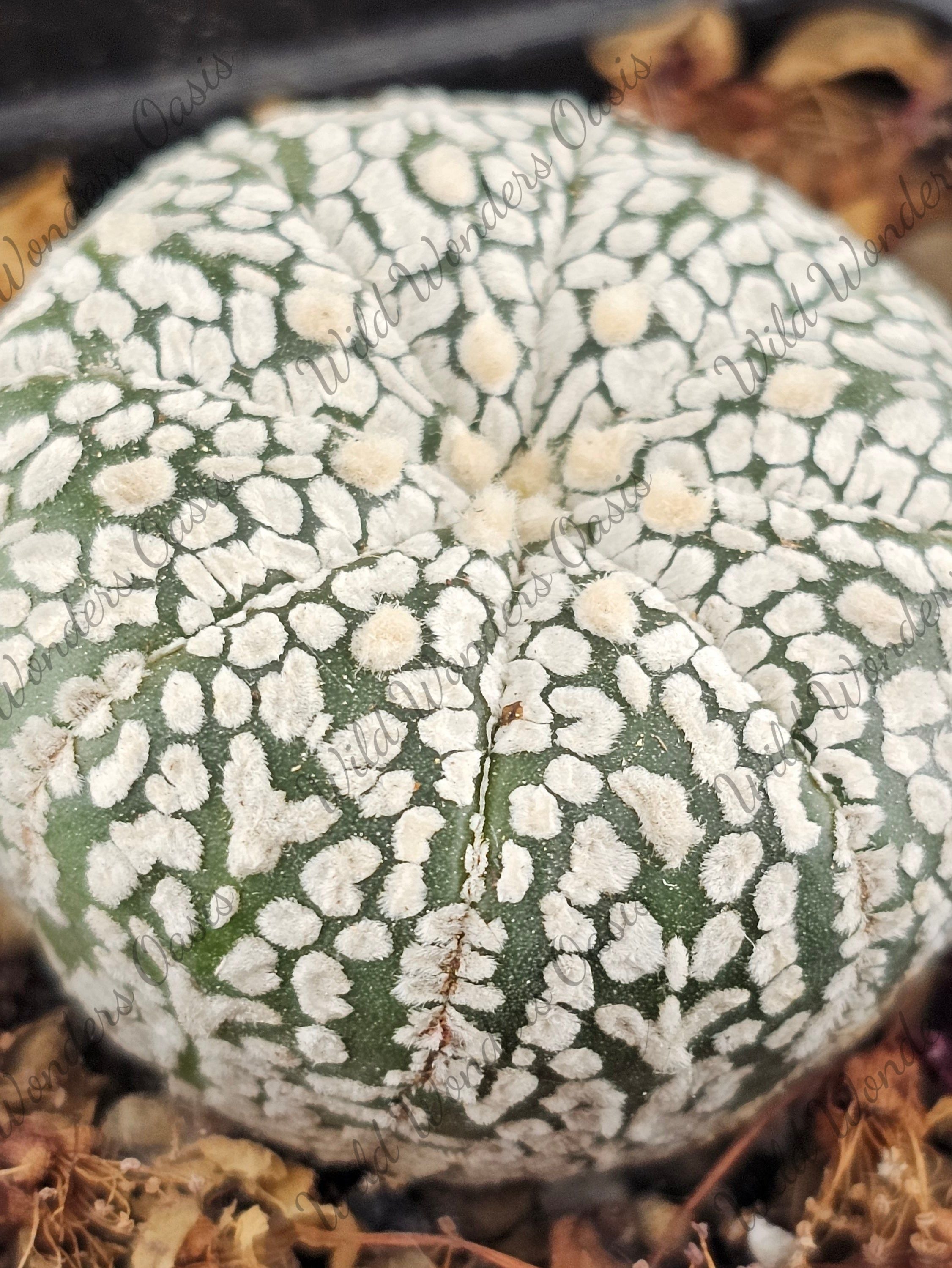
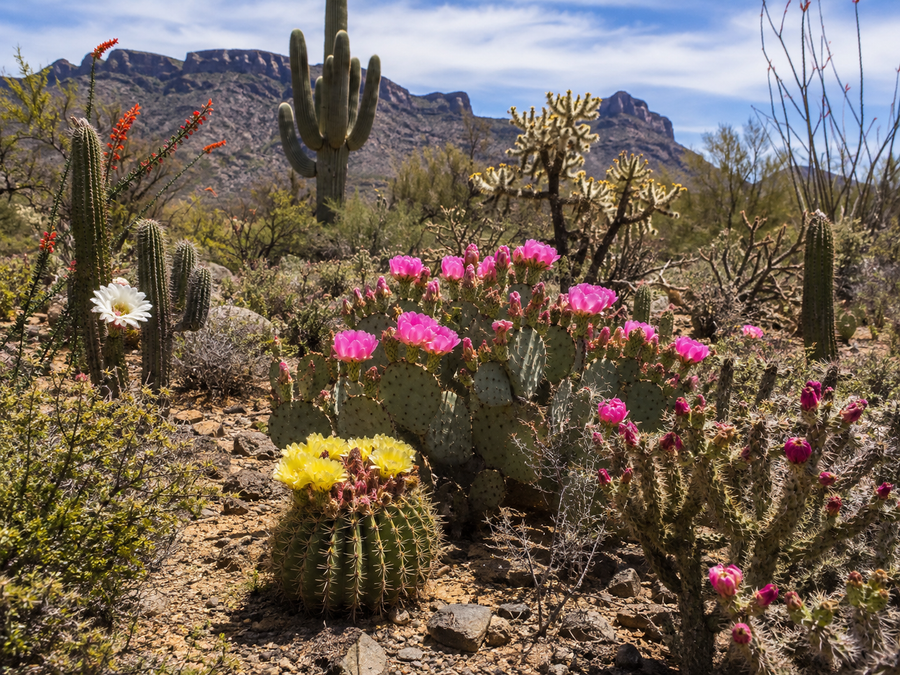
Astrophytum asterias & friends — the star of the show. No spines, perfect symmetry, speckled stardust skin. A must-have for collectors and design snobs alike.
- Loves full sun once acclimated; the white flecks are sunscreen.
- Extremely rot-prone — the gritty-soil and dry-out rules are non-negotiable.
- Slow. Celebrate every millimeter.
Chin cacti — the bright side of spikes. From the grafted neon moon cactus to the subtle button cactus with blush blooms.
- Tolerates a little less sun than most; bright indirect is fine indoors.
- Grafted moon cacti live on their green rootstock — keep the base healthy and the top follows.
- Flowers readily on a windowsill. Pure serotonin.
Desert minimalists. Chilean fog-desert cacti with a chalky bloom and a slow, sculptural habit.
- Bright light, excellent drainage, very little water — they drink fog in the wild.
- Keep water off the body; the chalky coating is part of the look.
- Growth is glacial. That's the point.
The golden clusters. 'Copper King' and its pincushion cousins: clumping, copper-toned, with rings of tiny blush flowers.
- Full sun, fast soil, the usual dry-out cycle.
- Clusters spread sideways — give it a wider, shallow pot over time.
- Looks like jewelry, acts like a survivor.
Bunny ears — the deceptively cute one. Looks pettable. Isn't.
- Glochids come off at a touch and are miserable to remove. Tongs, always.
- Full sun, very drought-tolerant, happy outdoors in mild climates.
- Pads root easily: callous, plant dry, wait.
Is this normal? (Usually, yes.)
Travel fatigue looks alarming and fixes itself. Here's how to tell the difference between a shrug and a problem — and what to do about each.
It's a bit wrinkled or soft-looking
Normal. Mild dehydration from transit. Give it the 7–10 day wait, then a deep water, and it plumps back within days.
A corky brown patch near the base
Usually normal. Corking is a woody skin older cacti develop at the base. Hard and dry = fine. Soft, dark and spreading = rot; see below.
Spines bent or broken from shipping
Cosmetic. Spines don't regrow on that spot, but new growth above it will be perfect. The plant doesn't mind.
The base is dark, soft and smells off
Not normal. That's rot from wet soil. Unpot, let it dry, and cut above the rot to re-root the top if needed. If it arrived that way, photos to us within 48 hours and the Live Arrival Guarantee covers it.
What to send us if something's wrong
- Your order number
- A photo of the whole plant
- A close-up of the soft or discolored area
- A photo of the pot and soil
The more we see, the faster we can tell a shrug from a problem.

🟤 The dirt it wants
Gritty, dry, and in a pot with a hole.
Fast-draining cactus mix with pumice or grit, in unglazed terracotta if you can. Top-dress with sand or gravel to keep the base dry and the fungus gnats confused. The soil guide has the ratio for pokey vs. fat-stemmed species.
The dirt (and gear) it actually wants
What we use at the nursery. Our own products first; the rest are the exact Amazon picks we've tested.
-
From our shop
 Top dressing
Transform Your Plants with TOYPOPOR's Silly Sand: The Fun and Functional Decorative Sand!
Keeps the crown dry and the fungus gnats confused.
From $19.81 View -
From our shop
 Cold weather
Plant Snuggie in a Packet — 72 Hour Shipping Heat Pack 🔥
72-hour heat pack for the next plant you order when it's under 50°F.
$6.50 View -
Affiliate · Amazon
 Soil
Organic perlite (no additives)
The 50 in 50/50. Check the bag says no fertilizer — many do.
~$12 See on Amazon ↗ -
Affiliate · Amazon
 Lighting
Adjustable small grow light
For windowsills that are more 'vibe' than 'sun'.
~$30 See on Amazon ↗ -
Affiliate · Amazon
 Monitoring
Humidity / temperature monitor
Stops the guessing. Put it next to the plant, not across the room.
~$12 See on Amazon ↗


Some links are affiliate links. If you buy through them we earn a small commission at no extra cost to you — it keeps the care guides free.
Seen it done once? It's easier.
Short care videos from the nursery. 22,000+ plant people already subscribe.
Does your plant need a new buddy?


Arrives alive. Or we fix it.
A rumpled leaf after a cross-country road trip is normal. A plant that arrives in genuinely bad shape is not — and that one's on us.
- Unbox & look it over Bring it inside and look it over with tongs. Bent spines are travel; a soft, dark base is not.
- Message us within 48 hours Order number + clear photos of the plant, the packaging and the shipping label.
- We sort it out Replacement or refund per the policy. No interrogation, no plant-shaming.
Keep the plant and packaging while we review. Full details in the policy.
Join the Wild Ones. It's free, and it's mostly humor.
The insider list for people who talk to their plants. Care tips you'll actually read, new arrivals before they hit the homepage, and the occasional subscriber-only deal.
- Every quick-start, soil recipe and video, free
- New arrivals and rare drops announced to you first
- One email a week, max. We're busy watering.
No spam. Unsubscribe whenever. Your plants will understand. See all four tiers
🎁 There's a discount code in your box
One cactus is never enough. Build your desert dynasty.
There's a discount code in your box. Grab a weird, rare or variegated cousin, or send one to a spiky friend — you know who. Touch less. Water less. Love endlessly. You and your cactus were meant to thrive at a distance.