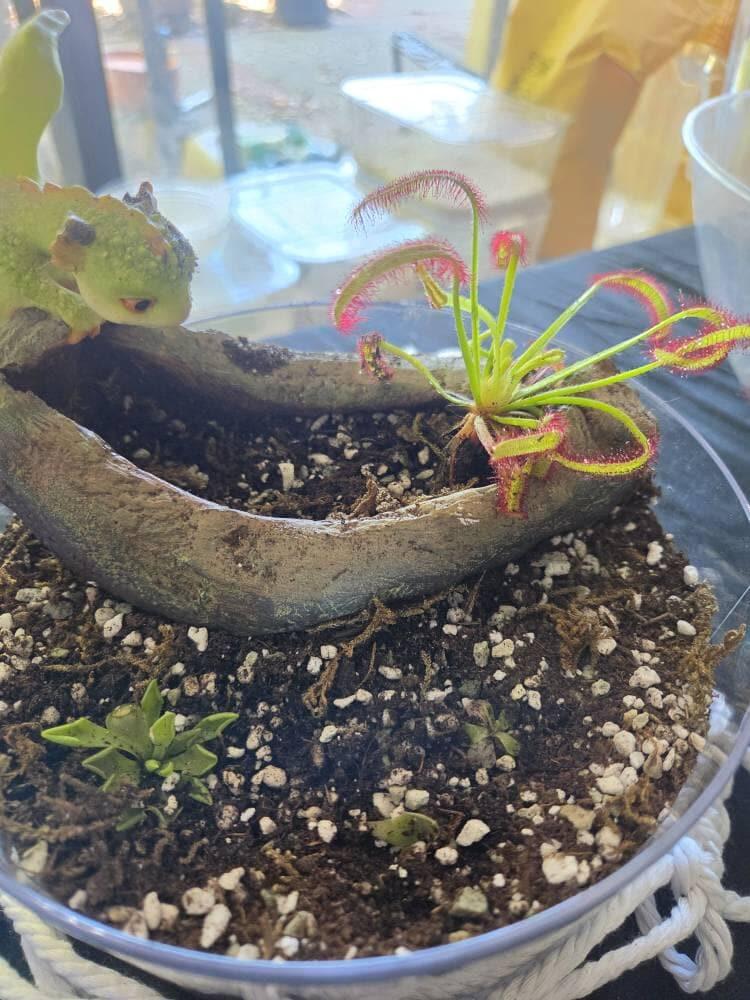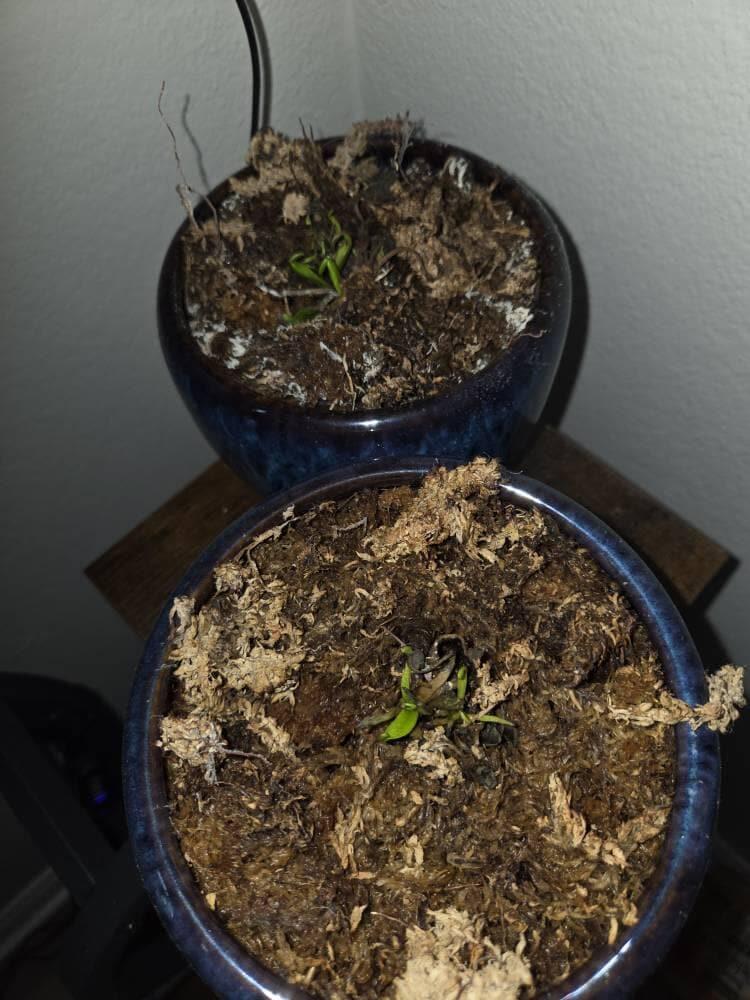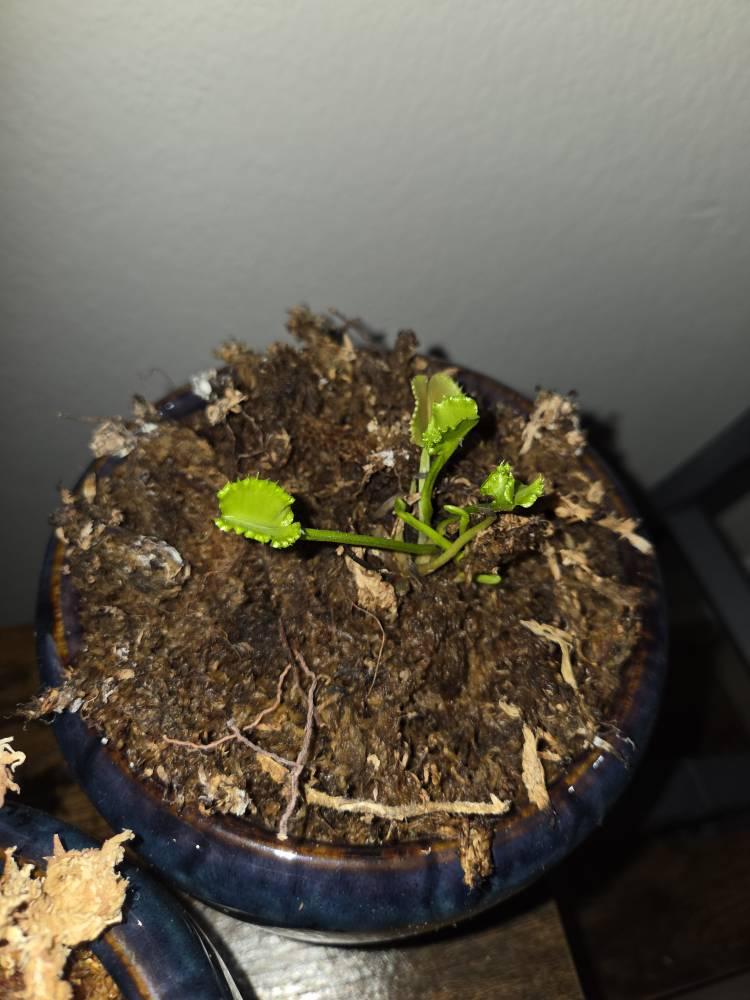
Cape sundews (Drosera capensis) look like tiny botanical sea monsters, and honestly? That’s part of the appeal. Their sparkling tentacles trap small insects, making them fascinating plants to grow. Give them bright light, mineral-poor water, and the right growing medium, and they’re relatively forgiving carnivorous companions.
Meet more tiny hunters in our Bug Eaters & Beauties carnivorous plant collection.
Light: keep the sparkle switched on
Cape sundews need strong light to maintain healthy growth and their signature sticky droplets. A bright window with several hours of direct sun can work, or use a suitable grow light.
Introduce stronger light gradually, especially after shipping. A plant raised in gentler conditions can scorch if you immediately serve it the full solar experience.
Water: skip the mineral cocktail
Use distilled water, reverse-osmosis water, or clean collected rainwater. Ordinary tap water can contain minerals that accumulate in the growing medium and damage sensitive roots.
Keep the medium consistently moist. A shallow tray of suitable water is a practical approach during active growth. Don’t let the pot dry out like a succulent, because this little hunter did not sign up for desert life.
Soil: boring is beautiful
Choose an unfertilized carnivorous-plant mix, such as additive-free sphagnum peat moss mixed with perlite, or suitable long-fiber sphagnum moss. Avoid standard potting soil, compost, and mixes with added fertilizer.
Use a pot with drainage. Nutrient-rich soil is not a kindness here.
Feeding: no hamburger, please
A Cape sundew can catch small insects on its own. If grown indoors without prey, occasional tiny insects are enough. Feeding is supplemental, not a substitute for adequate light.
Skip meat, cheese, and other people food. This is a plant, not a tiny roommate with snack requests.
Why has the dew disappeared?
Low light, recent shipping, changes in conditions, or drying out can reduce dew. Check the basics before trying to solve everything with more humidity. Avoid a sealed, stagnant container.
Healthy new leaves producing dew are a better recovery signal than expecting damaged old leaves to bounce back.
The takeaway
Bright light, low-mineral water, and unfertilized growing medium are your Cape sundew’s core requirements. Nail those, and let the tentacles handle the theatrics.
Ready to grow your own little bug-eating entourage? Explore our carnivorous plant collection and find your next botanical obsession.